
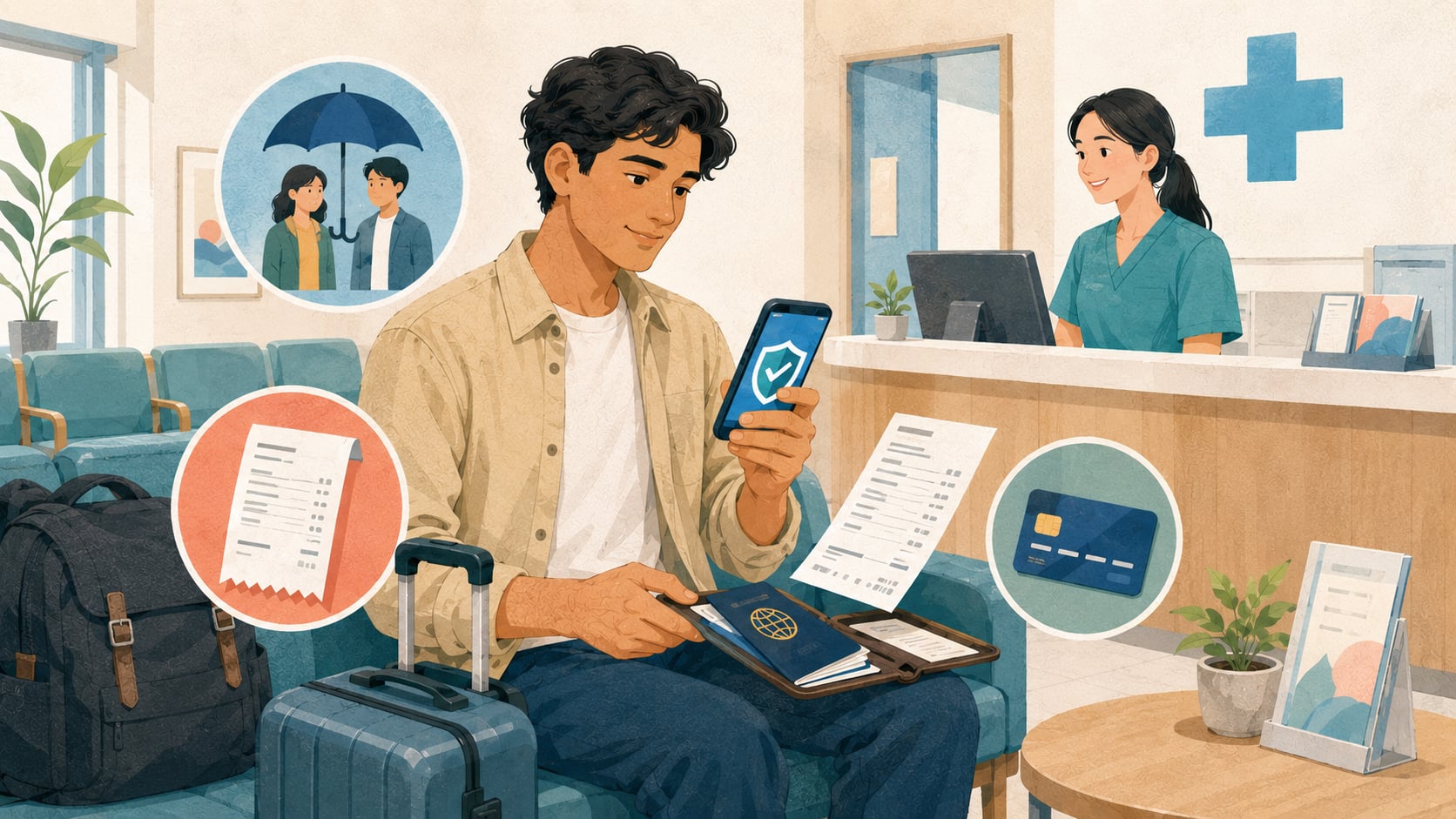
Quick Answer: Short-term visitors in Japan generally cannot use Japan's public health insurance and are billed in full by medical institutions (cashless travel insurance may eliminate upfront payment at the desk). Before traveling, confirm travel insurance and payment methods. For unpaid debts arising on or after April 1, 2026, cases become reportable when the cumulative balance is ¥10,000 or more and recovery is judged impossible or difficult. Information registered in the system is provided from MHLW to immigration authorities and may be used in stricter inspections on your next entry to Japan. MHLW Q&A states 「原則として日本への上陸は拒否されます」 for reported foreign visitors. Pay at checkout when required and keep receipts.
Who is this guide for—and who is it not for?
This guide is for foreign tourists and short-term visitors without Japanese public health insurance. Under this reporting system, foreign visitors receiving medical care (hounichi gaikokujin jushinsha / 訪日外国人受診者) are defined as temporary visitors who do not hold Japanese nationality, live abroad, and are not enrolled in Japan's public health insurance.
- Visitors / tourists (this article)
- Temporary Visitor, short business stay, etc.
- Medium- to long-term residents
- Work, study, family, permanent residence, etc.
- Visitors / tourists (this article)
- Generally not enrolled
- Medium- to long-term residents
- Generally enrolled (National Health Insurance or Employee Insurance)
- Visitors / tourists (this article)
- No public insurance benefits; full billing in principle
- Medium- to long-term residents
- Usually 10–30% copay with insurance card
- Visitors / tourists (this article)
- Target audience for the reporting system
- Medium- to long-term residents
- Not the reporting target
| Visitors / tourists (this article) | Medium- to long-term residents | |
|---|---|---|
| Typical status | Temporary Visitor, short business stay, etc. | Work, study, family, permanent residence, etc. |
| Public health insurance | Generally not enrolled | Generally enrolled (National Health Insurance or Employee Insurance) |
| Typical cost share | No public insurance benefits; full billing in principle | Usually 10–30% copay with insurance card |
| Unpaid-debt reporting system | Target audience for the reporting system | Not the reporting target |
📌 This article uses "tourists" and "travelers" for readability. If you live in Japan with a residence card and health insurance, see our
healthcare guide for residents
and
navigating hospitals in Japan
.
What is the basic flow at a hospital or clinic?
Most visits follow the same pattern whether you speak Japanese or not.
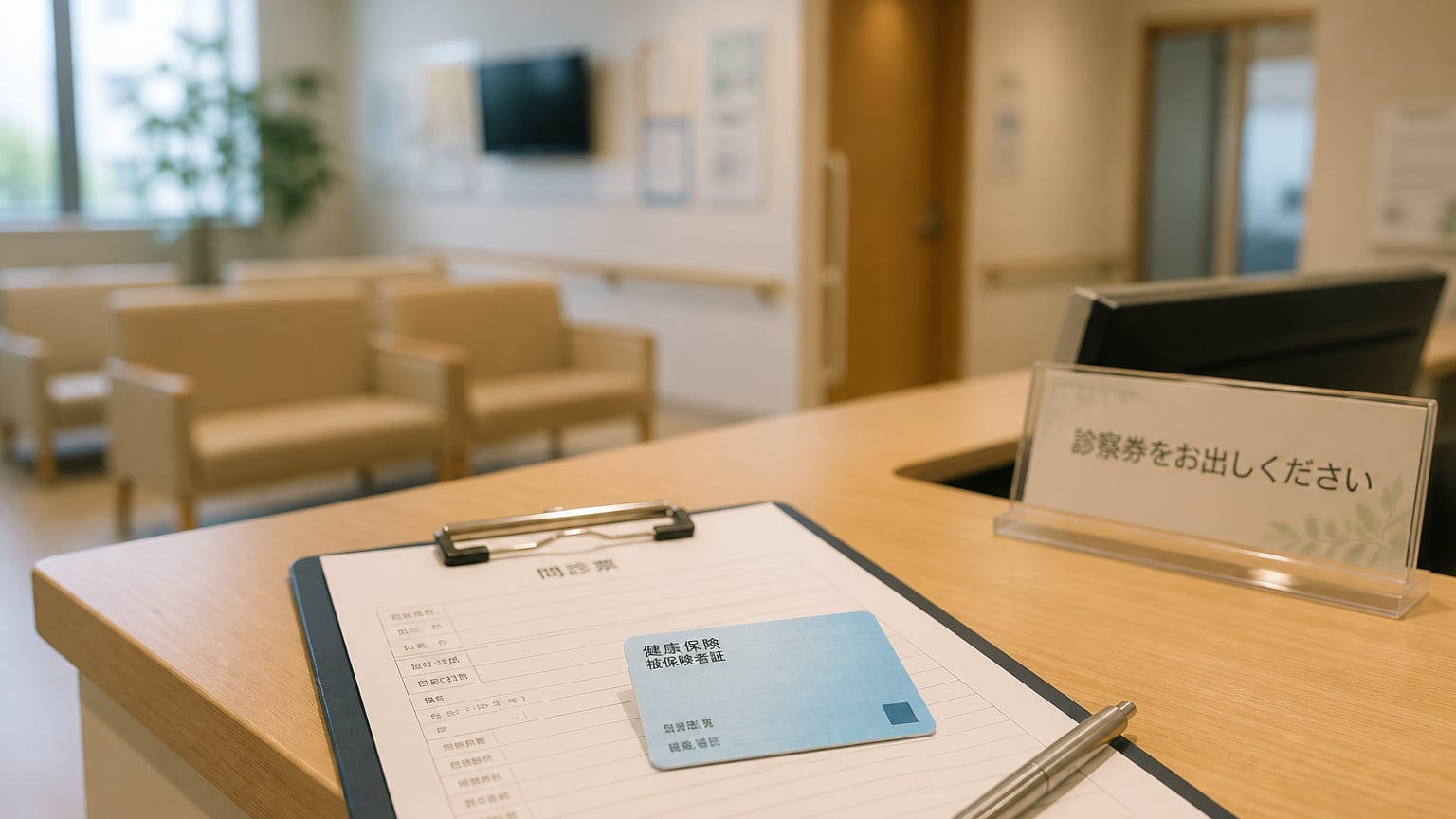
- Reception (受付) — Present your passport; explain it is your first visit if needed
- Medical questionnaire (問診) — Fill in symptoms, allergies, and history
- Consultation / examination — See a doctor or nurse
- Billing (会計) — Pay at the desk before leaving (unless your insurance handles direct billing)
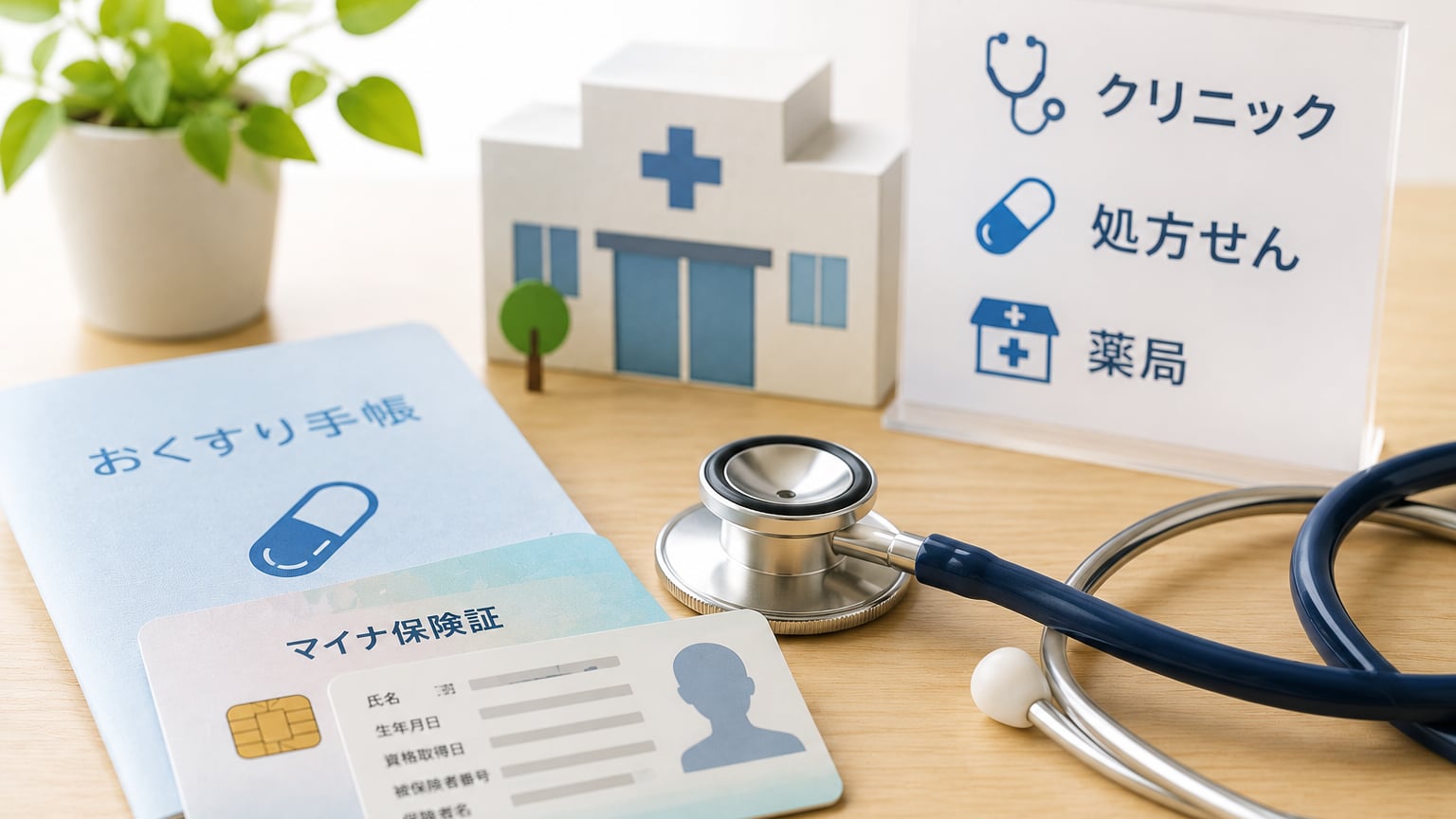
- Pharmacy — If prescribed medicine, fill the prescription at an in-house or nearby pharmacy
For emergencies, anyone can call 119 for an ambulance regardless of nationality. Public ambulance transport is generally free, but treatment, tests, and hospitalization at the destination are billed separately.
✔️ Tip: Many clinics accept walk-ins for minor issues. Certain large hospitals may charge an additional fee when you visit without a referral letter (shoukaijou). That fee applies under Japan's insured-care rules for covered patients. Uninsured visitors are generally treated as self-funded care (jiyuu shinryou), so confirm pricing with the facility in advance when possible.
What do you need before and during a visit?
Pre-trip checklist
- Travel medical insurance — Confirm coverage for illness, injury, hospitalization, and medical evacuation
- Credit card — Check international hospital acceptance; some small clinics are cash-only
- Cash (yen) — Useful when cards are not accepted
- Insurance company contact — Save the 24-hour emergency number and claim procedure
- Passport — Hospitals may record passport details at reception
At the hospital
- Ask for a cost estimate before non-urgent procedures when possible
- Confirm whether the clinic accepts direct billing to your insurer (many use pay-first, claim-later)
- Keep receipts, diagnosis summaries, and itemized bills for insurance claims
- Pay in full at checkout if you can—unpaid balances are the main trigger for reporting
How much do tourists typically pay?
Without Japanese public insurance, treatment is provided as self-funded care (jiyuu shinryou). Each medical institution sets its own prices, so charges may differ from Japan's insured fee schedule and from what residents pay with an insurance card.
📌 There is no single national price list for uninsured visitors. Ask for an estimate before non-urgent tests or procedures when you can. Emergency care can become expensive quickly depending on diagnosis, imaging, and whether admission is required.
Ambulance transport: Public ambulance transport through 119 is generally free. Medical treatment and hospital charges are billed separately by the facility.
Do you need travel insurance or credit-card coverage?
Strongly recommended. MHLW guidance notes that foreign travelers receive no public insurance benefits and are billed in full by medical institutions; private travel insurance helps cover unexpected costs. Cashless policies may remove the need for upfront payment at the desk.
When comparing policies, check
- Why it matters
- Hospital stays in Japan can be expensive
- Why it matters
- What you pay before insurance kicks in
- Why it matters
- Many Japanese hospitals require upfront payment
- Why it matters
- Often excluded or limited
- Why it matters
- May duplicate or supplement a standalone policy—read both
| Item | Why it matters |
|---|---|
| Medical treatment limit | Hospital stays in Japan can be expensive |
| Deductible / copay | What you pay before insurance kicks in |
| Pay-and-claim vs. direct billing | Many Japanese hospitals require upfront payment |
| Pre-existing conditions | Often excluded or limited |
| Credit card travel insurance | May duplicate or supplement a standalone policy—read both |
This article does not recommend specific products. Compare policies using the checklist above.
What happens if you do not pay medical bills?
Japan operates the Foreign Visitor Unpaid Medical Cost Information Reporting System. Under this system, foreign visitors receiving medical care are defined as temporary visitors without Japanese nationality who live abroad and are not enrolled in Japan's public health insurance. Qualifying unpaid-debt information is registered by insured medical institutions, provided by MHLW to the Immigration Services Agency, and may be used in stricter landing inspections on your next entry.
Reporting conditions (both required)
According to MHLW Manual Ver. 1.07, insured medical institutions report when both apply
- Cumulative unpaid balance meets the threshold
- Debts arising May 10, 2021 through March 31, 2026: ¥200,000 or more
- Debts arising on or after April 1, 2026: ¥10,000 or more
- Recovery is judged impossible or difficult after collection efforts
Insured medical institutions should register by the third business day of the month following the month that is two months after the billing date (based on the billing date's month-end), as a guideline.
Immigration and landing consequences
The MHLW Q&A (Q2) states that persons reported through the system may fall under grounds for denial of landing under the Immigration Control and Refugee Recognition Act, and quotes 「原則として日本への上陸は拒否されます」.
📌 Important nuance: MHLW Q&A uses this wording explicitly. Landing permission is still decided through individual immigration inspection for each person—you cannot conclude that every reported person is automatically denied. However, weakening the official guidance to "it might affect you" is also misleading.
If you later pay the debt, the insured medical institution must update the recovery information in the system immediately. Without that update, strict inspection may still apply even after payment.
How can you find multilingual medical facilities?
Official search tools include
- JNTO medical institution guide (English and other languages)
- MHLW-supported hospital lists linked from the MHLW foreign patient information page
Look for signage such as "English OK" or "外国語対応." In emergencies, prioritize the nearest appropriate facility—even if language support is limited.
Frequently asked questions
Does Japanese health insurance cover tourists?
Generally no. The reporting system targets visitors without public insurance eligibility—people living abroad without Japanese public coverage. Residents enrolled in National Health Insurance or employee insurance are outside this reporting scope.
I only owe ¥8,000 after a visit in May 2026. Can it still be reported?
Not solely on that amount under the new threshold. For debts arising on or after April 1, 2026, the cumulative unpaid balance must be ¥10,000 or more (and recovery must be judged difficult). Older debts before April 1, 2026 follow the ¥200,000 threshold.
What should I do in an emergency vs. a routine clinic visit?
- Priority
- Call 119; sort out payment after stabilization
- Priority
- Visit a clinic; confirm insurance and payment method first
- Priority
- Pay in full if possible; keep all receipts for insurance claims
| Situation | Priority |
|---|---|
| Life-threatening | Call 119; sort out payment after stabilization |
| Non-urgent illness | Visit a clinic; confirm insurance and payment method first |
| After treatment | Pay in full if possible; keep all receipts for insurance claims |
I paid my bill but was reported earlier. What now?
Ask the hospital to register recovery information in the reporting system immediately. MHLW manual guidance warns that without an update, strict inspection may still occur on your next entry.
What should you do next?
- Before your trip: Buy or verify travel insurance; photograph policy numbers and emergency contacts
- During your stay: Pay medical bills before leaving Japan when possible
- After a visit: File insurance claims with receipts and medical summaries
- Planning a return visit after past unpaid debt: Resolve the debt with the hospital and confirm system updates—consider professional immigration advice if unsure
For day-to-day hospital navigation as a resident, see
Navigating Hospitals in Japan
.
Sources
Last verified: June 22, 2026
- MHLW — Foreign visitor unpaid medical cost reporting (overview page)
- MHLW — Reporting Manual Ver. 1.07 (PDF)
- MHLW — Reporting Manual Q&A (PDF)
- MHLW — Operational change notice (Feb. 4, 2026, PDF)
- MHLW — Medical fee calculation manual for foreign visitors in Japan (overview)
- MHLW — Medical fee calculation manual for foreign visitors (PDF)
- MHLW — Manual for medical institutions on foreign patient care (PDF)
- Fire and Disaster Management Agency — Ambulance guide for visitors to Japan (portal) (how to use 119)
- Fire and Disaster Management Agency — Ambulance guide for visitors to Japan (English pamphlet, PDF)
- Hiroshima City — Using ambulances (FAQ) — states ambulance use is free
- JNTO — Medical institution search
- Immigration Services Agency — Landing procedures for foreign nationals