
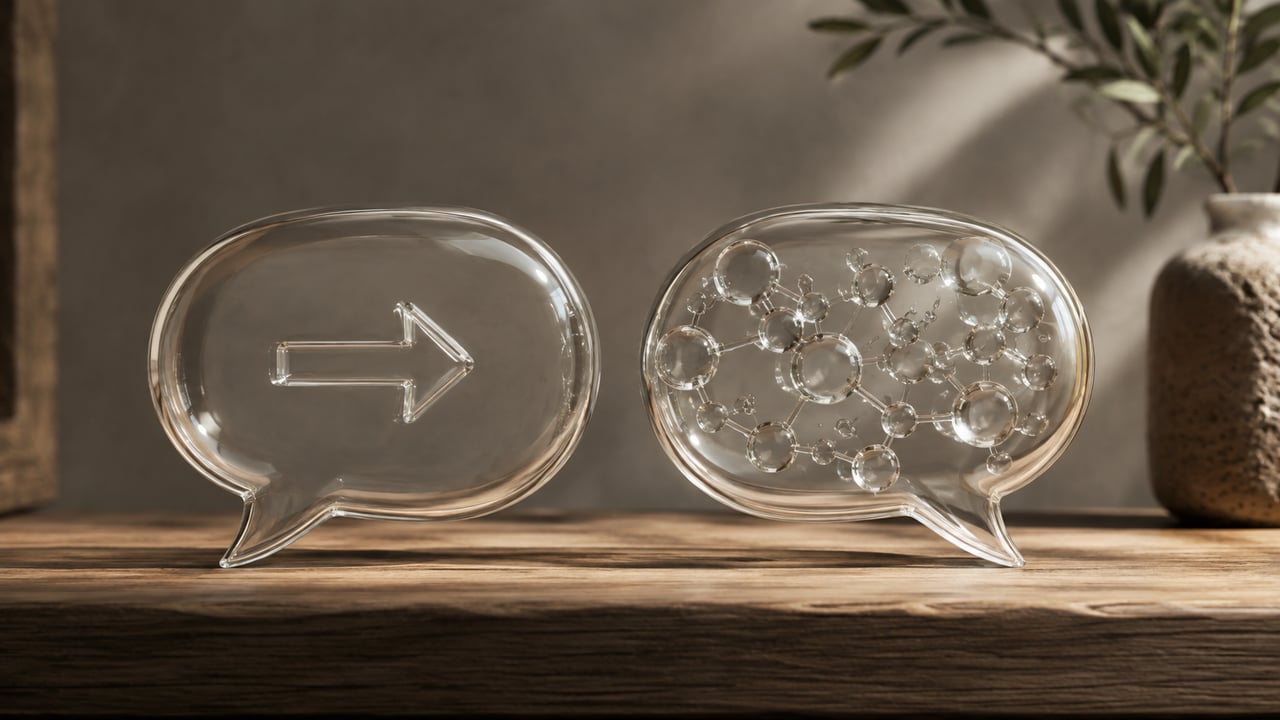




Quick Answer: Communication in Japan is often described as high-context: much of the meaning rides on shared background, relationship, and non-verbal signals—not only the words spoken. If you come from a low-context culture that values explicit statements, you may misread silence, indirect refusals, or soft “yes” responses. This guide explains the difference and how to notice high-context cues in daily life—without treating “all Japanese people” as one fixed style.
Who is this guide for?
Foreign residents who feel conversations in Japan “don’t match the words”—for example when a polite yes is not full agreement, or when invitations sound vague. This article is a foundation explainer on high- vs low-context communication. For historical and philosophical background, see
Cultural Roots of Japanese Communication
. For terms like honne and tatemae, see
Key Concepts in Japanese Communication
.
What are high-context and low-context communication?
Anthropologist Edward T. Hall framed high-context cultures as relying more on context, relationships, and implicit understanding, and low-context cultures as favoring explicit verbal messages. Japan is often cited as a high-context example, but individuals, industries, generations, and situations vary widely. Read the patterns below as common tendencies—not rules that apply to every person or meeting.
- Higher-context tendency
- Shared context, tone, what is left unsaid
- Lower-context tendency
- Clear words, definitions, written confirmation
- Higher-context tendency
- Harmony, saving face, reading the room
- Lower-context tendency
- Clarity, efficiency, direct feedback
- Higher-context tendency
- Can carry meaning or space
- Lower-context tendency
- Often “still thinking” or waiting to speak
- Higher-context tendency
- Often indirect or softened
- Lower-context tendency
- Direct “no” more acceptable
| Lens | Higher-context tendency | Lower-context tendency |
|---|---|---|
| Where meaning lives | Shared context, tone, what is left unsaid | Clear words, definitions, written confirmation |
| Social priority | Harmony, saving face, reading the room | Clarity, efficiency, direct feedback |
| Silence | Can carry meaning or space | Often “still thinking” or waiting to speak |
| Refusal / disagreement | Often indirect or softened | Direct “no” more acceptable |
When does high-context communication show up in Japan?
You may notice high-context dynamics in situations such as:
- Work requests: “Is it possible?” may invite you to weigh workload and deadlines—not only answer literally
- Social invitations: “Let’s meet again sometime” can signal a soft decline depending on tone and context
- Meetings: Who speaks, when, and how others react may matter as much as the literal content
- Personal relationships: Care may be shown through actions and small adjustments rather than explicit words
In emergencies, safety instructions, medical triage, or international tech teams, more direct language is often preferred. Styles shift by setting—avoid assuming one national “default” for every room.
What trips up people from low-context backgrounds?
Common friction points include:
- Treating every “yes” as agreement — it may be acknowledgment, politeness, or ambiguity
- Feeling anxious about silence — it may mean reflection, hesitation, or indirect disagreement
- Worrying that questions seem rude — especially upward in hierarchy; phrasing and timing matter
- Missing feedback — improvement hints may arrive indirectly or through changed behavior
These differences usually reflect ways to protect relationships, not dishonesty. Adjusting your expectations reduces daily frustration.
How can you read high-context conversations better?
Observe before you interpret
In a new group, listen more and watch patterns repeat. In meetings, notice eye contact, who adds detail, and who stays quiet—not only what was said.
Confirm without cornering the other person
When unsure, ask softly: “Just to confirm—do you mean by end of this week?” or “If timing is tight, we can look at another option.” Practical phrasing for foreigners is covered in
Communication Strategies for Foreigners
.
Read non-verbal signals together with words
Facial expression, pauses, posture, and distance can contradict—or complete—the verbal message. See
Non-Verbal Communication in Japan
for a deeper dive.
How should you adjust your own style?
You do not need to “become Japanese.” Many Japanese speakers add explanation or switch to English when they know you are from abroad. A realistic balance:
- Make deadlines, money, contracts, and safety explicit—in writing when possible
- Treat indirect phrases as signals to explore further, not final answers
- Ask politely for specifics when stakes are high; that is acceptable with the right tone
Frequently asked questions
Can foreigners learn high-context communication?
Full native-level intuition may take years, but most long-term residents improve step by step. Aim to reduce misunderstandings—not perfection.
Is Japan always high-context?
No. Multinational offices, younger teams, and some industries use more direct styles. Context matters more than stereotypes.
Can I stay low-context all the time?
Sometimes, but workplace and neighborhood friction can grow. Many people mix styles—direct for important facts, more indirect for social smoothing.
How do I ask for clearer explanations?
Try: “Could you walk me through that a bit more specifically?” Timing and politeness help, especially with senior colleagues.
What to read next
Cultural roots (history and ideas)
Key concepts (honne, tatemae, and more)
Verbal patterns and indirect speech
Sources
- Edward T. Hall, Beyond Culture (Anchor Books, 1976) (verified 2026-09-08) — foundational high/low context framework
- Culture Active, “High and Low Context Cultures” (verified 2026-09-08) — secondary overview of Hall’s concepts
- Ministry of Foreign Affairs of Japan, multilingual life/work guides (verified 2026-09-08) — public information for foreign residents in Japan