
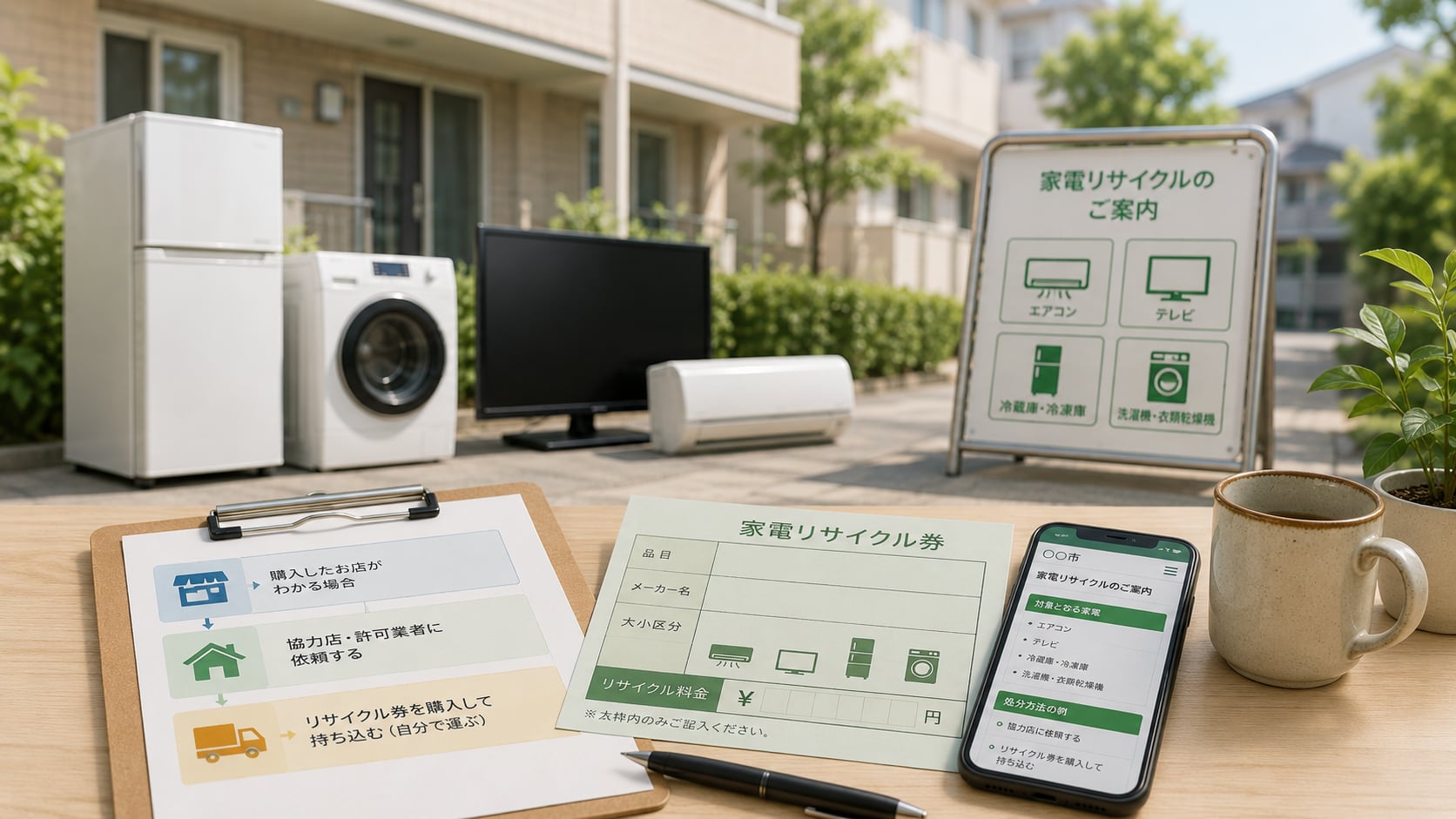
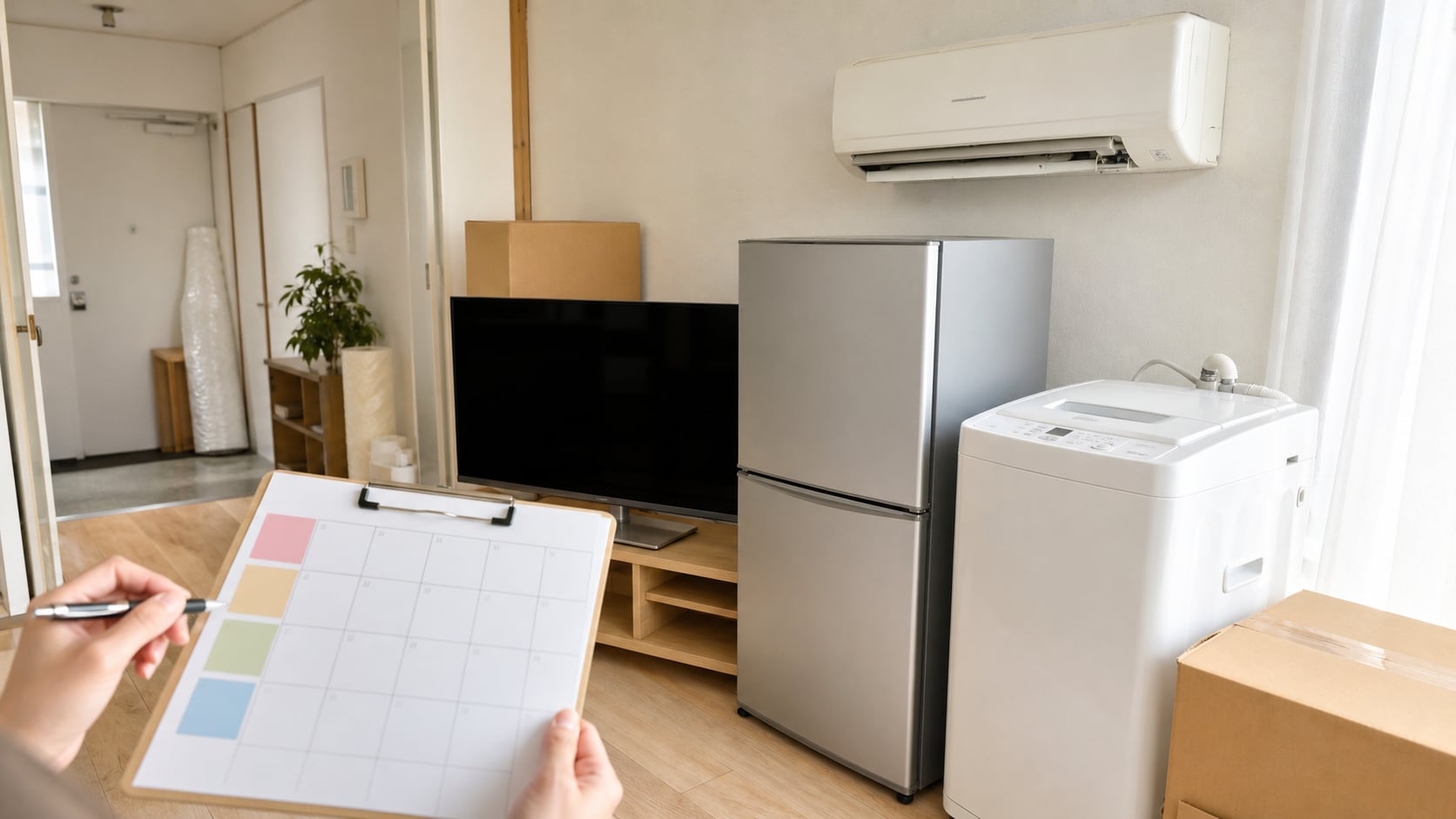
Quick Answer: Home appliance recycling in Japan—for you if the purchase store is unknown, far away, or closed. Includes secondhand units, gifts, and leftovers from previous tenants. For air conditioners, TVs, refrigerators, and washers, start with your municipality’s appliance-recycling guidance.
Who is this for?
- Bought a TV or fridge secondhand and do not know where to dispose of it
- Must clear appliances left by a previous tenant
- Purchase store is too far or has closed
- Unsure which shop to call for pickup
Related articles
If any of these apply, read the linked guide.
- Want an overview of the four designated items and all methods →
Appliance Recycling Law Guide
- Can transport by car and want a post office recycling ticket →
Recycling Ticket at Japan Post
📌 Air conditioners, TVs, refrigerators, and washers often cannot go out as sodai gomi. Check home appliance recycling options before applying for municipal bulky-waste pickup.
First try: call the purchase store
If you know the retailer and it is still open, call and ask about take-back without buying a replacement. You may be able to arrange recycling and transport fees through the store.
📌 If the store cannot take the unit, check your municipality’s information next.
Open your municipality’s official page
When the purchase store is not an option, look up your city/ward’s 家電リサイクル guidance.
Search examples: (municipality name)+ 家電リサイクル, or use RKC municipality page search.
The guidance page may list
- Cooperative stores (shops that accept appliance pickup) with contact details
- Licensed haulers who can collect and transport appliances
Cultural note: Garbage rules differ by municipality in Japan. For appliance recycling, cooperative store names, fees, and booking steps also vary—start on your city/ward’s official page.
📌 There is no nationwide cooperative-store hotline. Names, fees, and booking differ by area.
Choosing a disposal method
- Best when
- No car, heavy unit, move-out deadline near
- Notes
- Collection/transport fee on top of recycling
- Best when
- Can transport by car or rental van
- Notes
- You must deliver to a designated site
- Best when
- Planning to buy a new unit
- Notes
- Harder if you are only moving out
| Method | Best when | Notes |
|---|---|---|
| Cooperative store pickup | No car, heavy unit, move-out deadline near | Collection/transport fee on top of recycling |
| Post office ticket + self delivery | Can transport by car or rental van | You must deliver to a designated site |
| Retailer on replacement purchase | Planning to buy a new unit | Harder if you are only moving out |
Fees are not fixed nationwide. Before booking, confirm the total (recycling + transport + stair carry if any).
Calling a cooperative store
Notes to prepare before you dial
- Example
- TV / refrigerator / washer / air conditioner
- Example
- Photos of the maker/model label (nameplate / model label) help
- Example
- Elevator yes/no
- Example
- Mention move-out deadline if urgent
- Example
- Say “unknown” upfront if you do not know
| Info | Example |
|---|---|
| Item type | TV / refrigerator / washer / air conditioner |
| Maker & model | Photos of the maker/model label (nameplate / model label) help |
| Address & floor | Elevator yes/no |
| Desired date | Mention move-out deadline if urgent |
| Purchase store | Say “unknown” upfront if you do not know |
Suggested call order
- Say you need to dispose of a designated appliance
- Give item type, manufacturer, and approximate size
- Ask whether they can pick up and handle the recycling ticket
- Ask for a total quote (recycling + transport + stairs)
- Confirm the earliest pickup date and what to prepare
If you will deliver the unit yourself
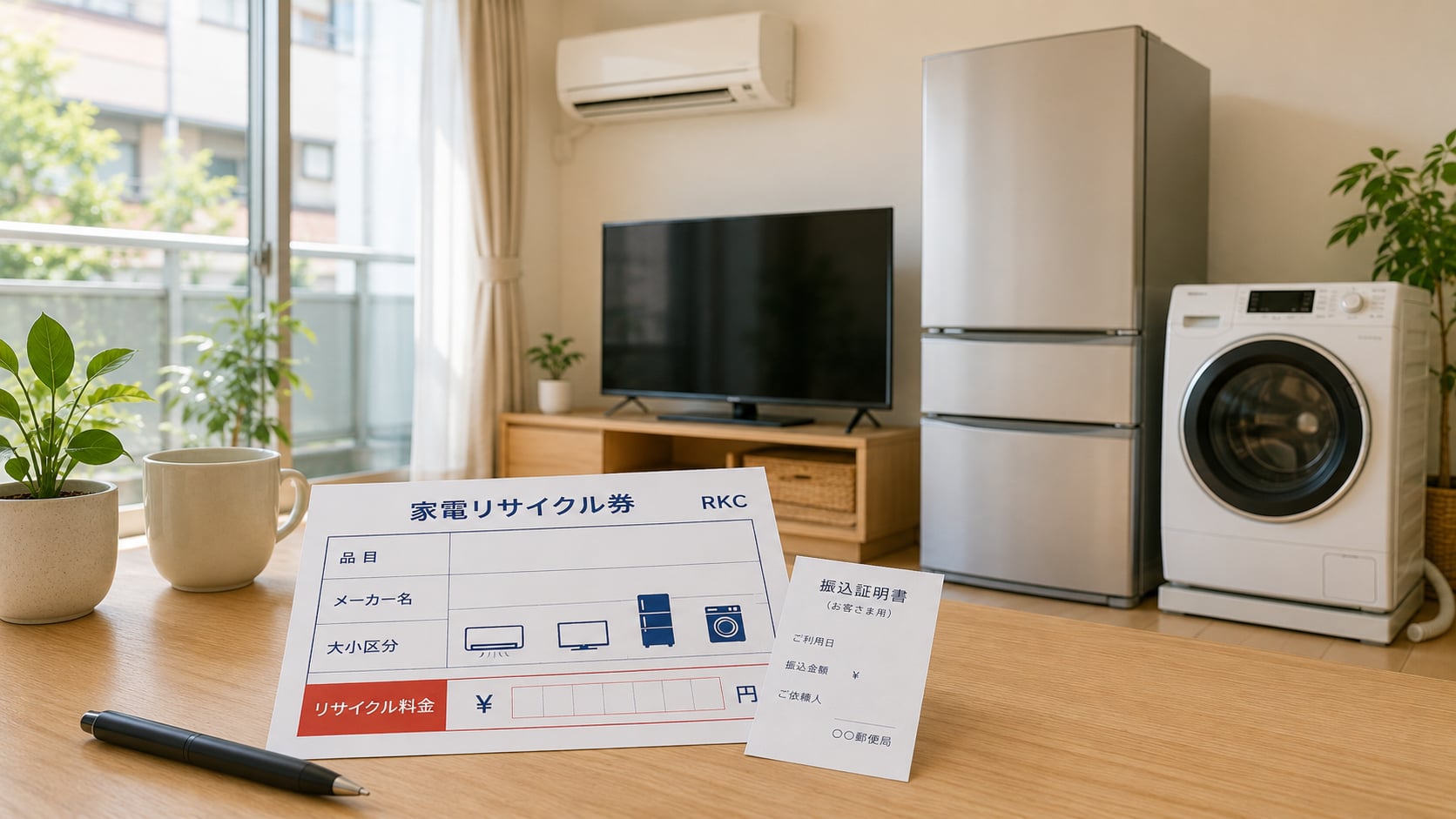
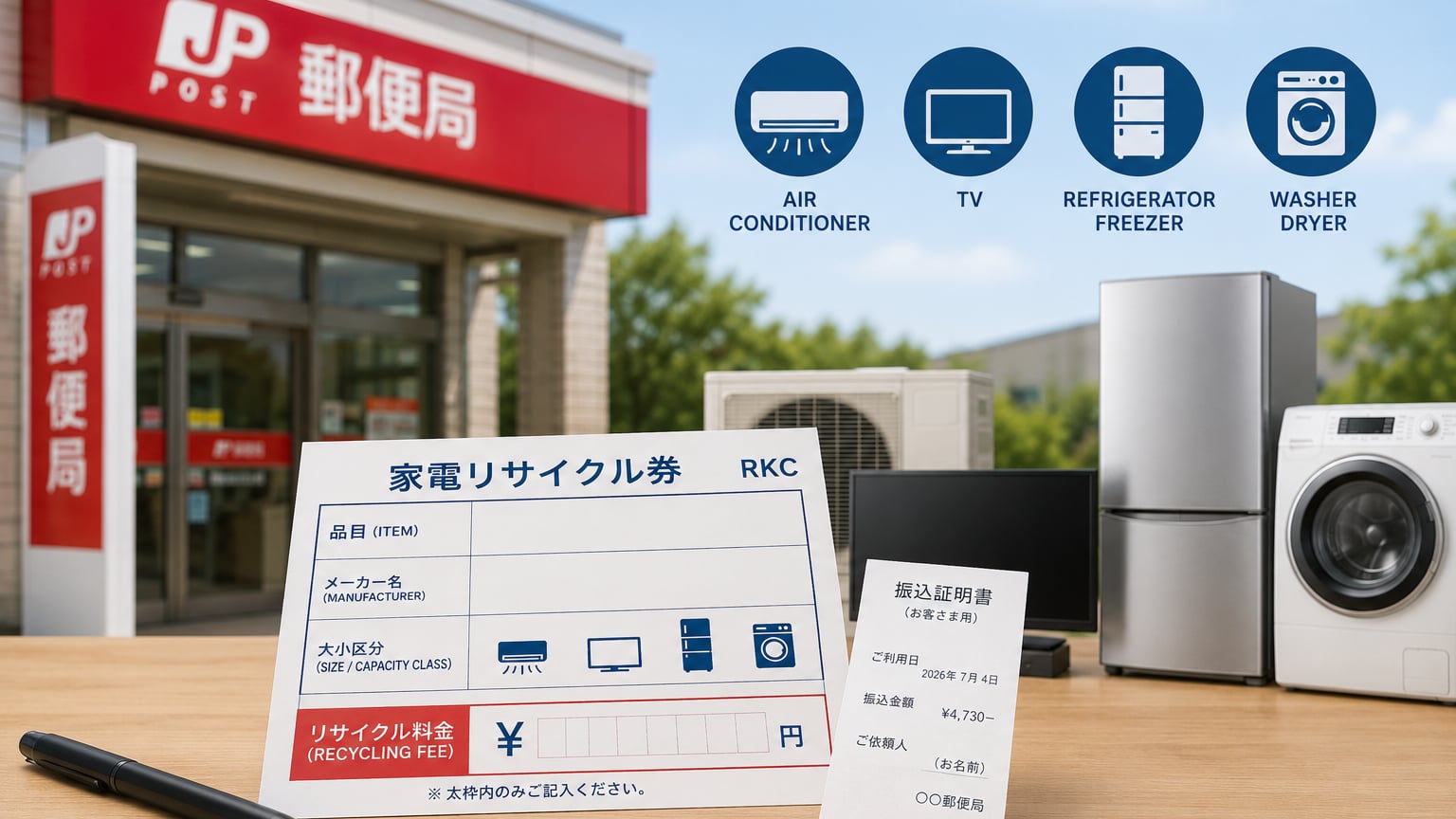
If you have a car, you can buy a recycling ticket at the post office and take the unit to a designated site.
- Confirm manufacturer, item type, and size class
- Use RKC search for a designated site and hours
- Buy the ticket at Japan Post or Yucho Bank
- Arrange a car or rental van; confirm you can load safely
- Empty the unit; keep maker/model labels visible
- Deliver within posted hours
Details:
post office guide
.
Case-by-case notes
Secondhand / flea market purchase
As the current holder, you must dispose of the unit under the Home Appliance Recycling Law—not sodai gomi. If it still works and you would rather sell it, see
How to sell on Mercari in Japan
(if it does not sell, return to the disposal steps here).
Gift from a friend or employer
Ask the giver for manufacturer and model photos if you no longer have the box.
Left behind by a previous tenant
You often must remove appliances before returning keys. Check your lease and move-out checklist.
Moving out soon
Clear air conditioners, TVs, refrigerators, and washers before furniture and boxes. Pickup may be booked weeks out.
No car: typical steps
- Open your municipality’s appliance-recycling page, or use RKC municipality search for your area
- Call a cooperative store or licensed hauler listed on that page
- Confirm pickup, stair-carry limits, and total quote
- Confirm they will handle the recycling ticket correctly
- If the quote is very high, compare rental van + self delivery once (only if you can lift safely)
📌 “Free pickup” on the street or social media may not be municipality-licensed. Verify the operator’s license before hiring.
Useful Japanese phrases (phone & shop)
- Japanese
- 家電を処分したいです
- Romaji
- Kaden wo shobun shitai desu
- Japanese
- 購入店が分かりません
- Romaji
- Kounuten ga wakarimasen
- Japanese
- 引き取りに来てもらえますか
- Romaji
- Hikitori ni kite moraemasu ka
- Japanese
- リサイクル料金と収集運搬料金を教えてください
- Romaji
- Risaikuru ryokin to shuushuu unpan ryokin wo oshiete kudasai
- Japanese
- エレベーターがない3階です
- Romaji
- Erebeetaa ga nai sankai desu
| English | Japanese | Romaji |
|---|---|---|
| I want to dispose of a home appliance | 家電を処分したいです | Kaden wo shobun shitai desu |
| I do not know where it was purchased | 購入店が分かりません | Kounuten ga wakarimasen |
| Pickup at my apartment is OK? | 引き取りに来てもらえますか | Hikitori ni kite moraemasu ka |
| Please quote recycling and transport fees | リサイクル料金と収集運搬料金を教えてください | Risaikuru ryokin to shuushuu unpan ryokin wo oshiete kudasai |
| It is on the 3rd floor with no elevator | エレベーターがない3階です | Erebeetaa ga nai sankai desu |
Frequently asked questions
Is there one national cooperative-store phone number?
No. Use your municipality page or RKC search tools.
Can I use sodai gomi for a small fridge?
Usually not. Confirm on your municipality’s official page.
What if cooperative stores are booked for weeks?
Try another listed shop, self delivery, or adjust your move-out schedule.
Can I use the post office method if I do not know the purchase store?
Yes. Not knowing the purchase store is not a barrier. If you can transport the unit, follow the
post office guide
.
What if I cannot explain item type or class at the post office?
Bring a written memo in Japanese (manufacturer, item type, size) and the unit—or photos of the maker/model label.
What to do next
- Search your municipality’s appliance-recycling page
- List two cooperative stores or licensed haulers to call
- If you have a car, also read the
post office guide
Sources
- RKC — For consumers (verified 2026-07-04)
- Ministry of the Environment — Home Appliance Recycling Law (four items) (verified 2026-07-04)
- AEHA — Consumer route guide (Japanese) (verified 2026-07-04)