
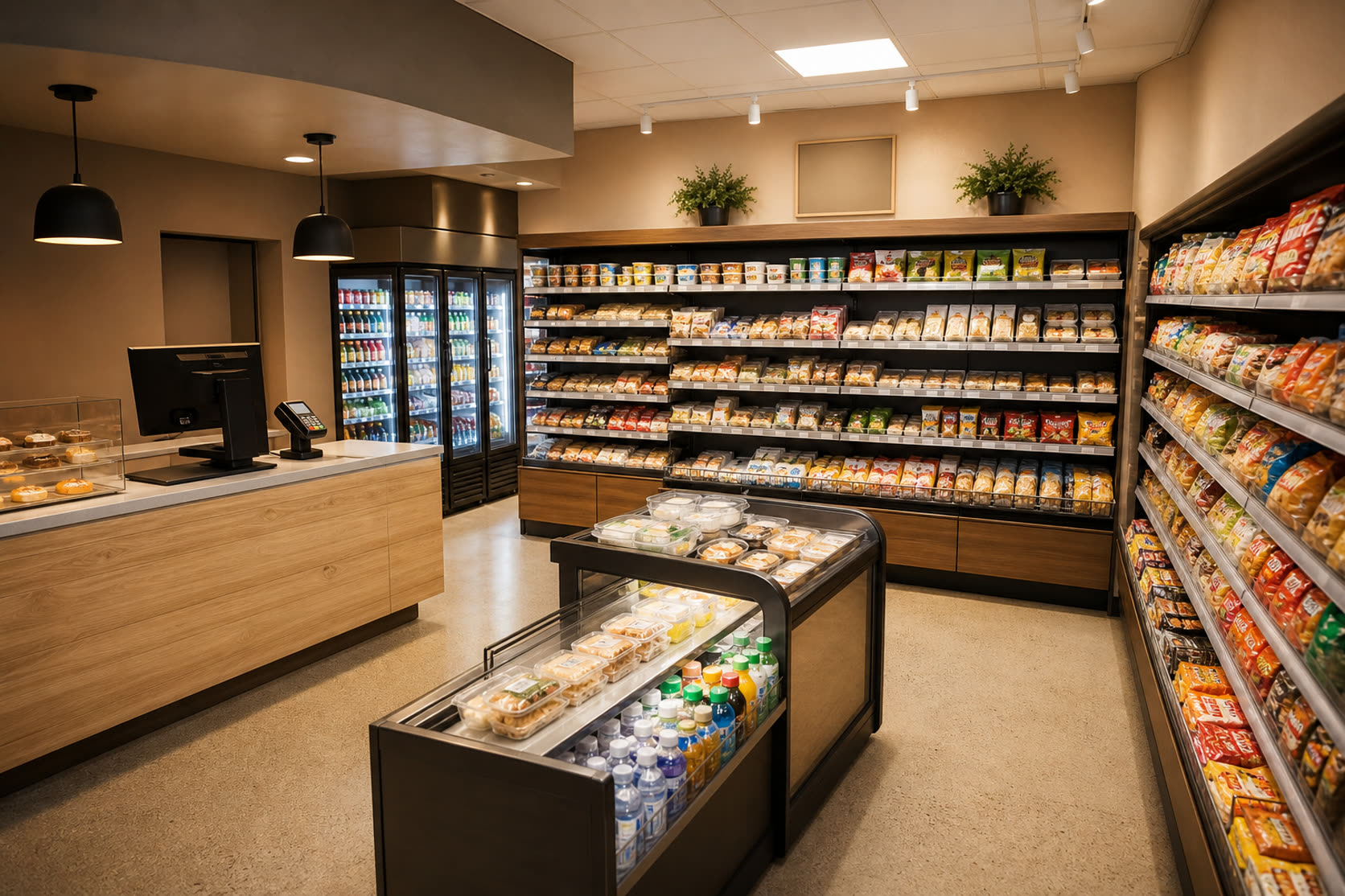



Ever found yourself standing in the middle of a Japanese convenience store (or コンビニ konbini as locals call them) at midnight, overwhelmed by the dizzying array of mysterious food packages, services, and the constant beeping of the automatic doors? You're not alone.
For newcomers to Japan, convenience stores can be simultaneously a lifesaver and a source of confusion. Many stores stay open late or around the clock, but hours, products, and services vary by store, chain, region, and season—check signage and each chain's official site rather than assuming every konbini is identical.
📌 There is no single national konbini catalog. What you can buy, pay for, or use in-store differs by location. Treat in-store posters, register signs, and official chain pages as the source of truth—not blog shortcuts or one-store habits.
As my friend Sarah from Canada once said after her first week in tokyo: "I thought I was just going in for a snack, but ended up paying bills, printing documents, and buying concert tickets. I still don't know what half the food was, but it was all delicious!"
Let's dive into the fascinating world of Japanese convenience stores and transform you from a confused foreigner into a konbini connoisseur!
Why Konbini Are Central to Japanese Life
Unlike convenience stores in many other countries, Japanese konbini are truly convenient. They're not just places to grab overpriced emergency supplies—they're legitimate lifestyle hubs that many Japanese people visit daily.
In a country known for long working hours and small living spaces, konbini serve as
- Late-night and early-morning meal options for busy schedules (hours vary by store)
- Bill payment centers
- Package delivery points
- Mini printing shops
- Banking facilities
- Late-night social spaces
With over 55,000 convenience stores nationwide (that's about one store per 2,300 people!), you're never far from a konbini in urban Japan. The "Big Three" chains—7-Eleven, Lawson, and FamilyMart—dominate the landscape, though local chains like Daily Yamazaki and Ministop also have loyal followings.
Navigating the Food Paradise
One of the biggest draws of Japanese convenience stores is their impressive selection of high-quality, ready-to-eat foods. Here's what you need to know
🍙 Onigiri (Rice Balls)
These triangular rice snacks wrapped in seaweed are a konbini staple. They come with various fillings such as
- Tuna with mayonnaise (ツナマヨ tsuna mayo)
- Salmon (鮭 sake)
- Pickled plum (梅 ume)
- Spicy cod roe (明太子 mentaiko)
Opening technique: Many foreigners struggle with the special packaging. Look for numbered tabs and pull them in sequence to unwrap the seaweed separately from the rice—this keeps the seaweed crisp!
🍱 Bento Boxes
Pre-made meal boxes range from traditional Japanese to Western-inspired dishes. Markdown timing and discounts vary by store, chain, and season—do not treat "after 8 PM" blog tips as a nationwide rule. Check shelf prices and stickers at the store you visit.
🍜 Instant Ramen & Hot Foods
- Most stores have hot water dispensers for instant noodles
- Many also have microwaves for heating other items; staff may heat items for you if you ask
- Hot-food counters (karaage, steamed buns, oden) exist in some stores, but availability and hours vary by store and chain
Language help: If you need to use the microwave, you can ask: "温めてもらえますか?" (Atatamete moraemasu ka? - "Could you heat this up for me?")
🥪 Sandwiches & Bread
Japanese convenience store sandwiches might surprise you with fillings like
- Egg salad (たまごサンド tamago sando)
- Fruit and whipped cream (フルーツサンド furūtsu sando)
- Fried cutlet (カツサンド katsu sando)
Cultural note: Japanese sandwiches often have their crusts removed and feature soft, pillowy bread.
🍦 Desserts & Sweets
The selection of desserts changes seasonally and includes
- Puddings and jellies
- Seasonal mochi (もち, rice cakes)
- Ice cream (with some flavors you won't find elsewhere!)
- Japanese and Western-style cakes
Beyond Food: Essential Konbini Services
What truly separates Japanese convenience stores from their international counterparts is the remarkable range of services they offer
💰 Financial Services
- ATMs: Many konbini have in-store ATMs; card support, fees, and hours depend on the ATM operator, your card, and the store. Seven Bank ATMs in 7-Eleven follow Seven Bank's published card/network list—confirm before you rely on them.
- Bill payment: Many stores accept utility and other bill payments, but eligible bill types, limits, and hours vary by store and bill category. Bring your payment slip or barcode and ask at the counter.
- Electronic money charging: Top up Suica, PASMO, and other IC cards where the store supports it (not every brand at every register).
Cultural context: Japan remains surprisingly cash-dependent despite its technological advancement. Konbini ATMs are lifesavers when bank ATMs close for the night.
📦 Delivery Services
- Package pickup/delivery: Send packages or pick up online orders
- Courier services: Major delivery companies like Yamato and Sagawa have drop-off points
- Food delivery: Some stores offer special takeout services
Language tip: If picking up a package, say "宅急便の受け取りに来ました" (Takkyūbin no uketori ni kimashita - "I've come to pick up a package")
🖨️ Printing & Business Services
- Copy machines for self-service copying
- Print documents from USB drives or the cloud
- Print photos directly from your smartphone
- Buy stamps and send mail
Practical tip: The machines usually have an English language option—look for a button that says "English" or "Language."
🎫 Tickets & Municipal Documents
- Concert and event tickets
- Theme park tickets
- transportation tickets
- Prepaid cards for online services and games
- Municipal document pickup: In participating municipalities, you may collect residence certificates or seal-registration certificates via konbini delivery linked to your My Number card. Prerequisites and eligible documents differ—see
City Hall Registration
and
My Number Card Guide for Foreigners
first.
🚽 Clean Restrooms
Most konbini have clean, free restrooms—a valuable resource during city exploration!
Etiquette note: It's considered polite to make a small purchase if you're only visiting to use the restroom.
Practical Tips for Konbini Shopping
Understanding the Layout
Most convenience stores follow a similar layout
- Drinks along the walls
- Prepared foods in refrigerated shelves
- Instant foods and groceries in center aisles
- Magazines and manga near the entrance
- Daily necessities and toiletries in a designated section
Payment Options
- Cash is always accepted
- Most stores accept credit cards (especially international brands like Visa and Mastercard)
- Electronic money and mobile payments (Suica, PASMO, PayPay, etc.)
Language help for payment
- "カードで払います" (Kādo de haraimasu - "I'll pay by card")
- "現金で払います" (Genkin de haraimasu - "I'll pay with cash")
Seasonal Items
Japanese konbini regularly update their offerings based on the season
- Spring: Cherry blossom-flavored drinks and sweets
- Summer: Cooling desserts, ice cream, and cold noodles
- Fall: Sweet potato and chestnut-flavored items
- Winter: Hot drinks, oden, and warming foods
Eco-Friendly Shopping
From July 1, 2020, retailers nationwide have been required to charge for covered plastic shopping bags with handles. Bags that meet specified thickness, marine-biodegradability, or biomass-content and labeling requirements are exempt, so the law does not make every takeaway bag necessarily chargeable.
- Bring your own bag or be prepared to pay ¥3-5 for a plastic bag
- You'll be asked "袋はいりますか?" (Fukuro wa irimasu ka? - "Do you need a bag?")
- Some eco-conscious shoppers keep a small foldable bag in their pocket or purse
Konbini Etiquette: Unwritten Rules
Understanding these cultural norms will help you navigate konbini like a local
At the Counter
- Have your payment ready
- Don't talk on your phone while checking out
- Many stores have small trays for placing money (rather than handing it directly to staff)
- Take your receipt (some stores place it in your bag automatically)
While Shopping
- It's perfectly fine to browse before purchasing
- However, reading magazines or manga without buying them is frowned upon
- Don't eat food before paying for it
Outside the Store
- Many konbini have small eating areas or counters
- It's acceptable to eat your purchases there, but clean up after yourself
- Some stores have garbage separation, so follow the posted instructions
Real-Life Experience & Tips
My friend Alex from Australia shared
"During my first month in a rural Japanese town, I was struggling with the language barrier until I discovered the 'point and smile' technique at my local FamilyMart. The staff were incredibly patient. Eventually, I became such a regular that they'd greet me with 'Hello' instead of 'Irasshaimase' when I walked in. The konbini became my comfort zone while adjusting to life in Japan."
Insider Tips from long-term Residents
-
Download konbini apps for special deals and point cards (7-Eleven, FamilyMart, and Lawson all have them)
-
Each chain has specialties - 7-Eleven is known for its food quality, Lawson for its desserts (especially Uchi Café products), and FamilyMart for its fried chicken
-
Try the private label products - 7-Premium, Lawson Select, and FamilyMart Collection often offer good quality at lower prices
-
Look for the 新商品 (shinshōhin - new product) labels to discover the latest seasonal items
-
Konbini coffee is surprisingly good and much cheaper than coffee shops
Essential Konbini Vocabulary
| Japanese | Romaji | English |
|---|---|---|
| コンビニ | Konbini | Convenience store |
| おにぎり | Onigiri | Rice ball |
| 弁当 / べんとう | Bentō | Boxed meal |
| 温めますか? | Atatamemasu ka? | Shall I heat this? |
| 袋はいりますか? | Fukuro wa irimasu ka? | Do you need a bag? |
| ポイントカード | Pointo kādo | Point/loyalty card |
| お箸はいりますか? | Ohashi wa irimasu ka? | Do you need chopsticks? |
| 割り箸 | Waribashi | Disposable chopsticks |
| レジ | Reji | Cash register |
| 引き換え | Hikikae | Exchange (for tickets) |
FAQ: Your Konbini Questions Answered
Q: Are konbini food items expensive?
A: While slightly more expensive than supermarkets, the prices are reasonable for the convenience. A typical onigiri costs ¥100-150, and a bento ranges from ¥400-700.
Q: Are there any vegetarian/vegan options?
A: Limited, but growing. Look for items labeled ベジタリアン (bejitarian) or plant-based. Onigiri with pickled plum (梅 - ume) or kelp (昆布 - konbu) are usually vegetarian-friendly.
Q: Can I pay utility bills at any convenience store?
A: Many stores post bill-payment services, but eligible bill types, limits, and hours vary by store and bill category. Bring your payment slip or barcode and confirm at the counter. If the store cannot accept it, follow guidance from your bank, municipality, or the bill issuer.
Q: Are products the same at all konbini chains?
A: Each chain has exclusive items and services. After living in Japan a while, you might develop preferences for specific products from different chains.
Q: What's the best time to shop at konbini?
A: Freshness and any markdowns depend on store, chain, and season. Early morning often has newly stocked shelves; evening markdowns happen in some stores but are not a nationwide schedule. Read shelf prices and stickers at your local konbini instead of memorizing blog timing rules.
Conclusion: Embracing Konbini Culture
Japanese convenience stores represent much more than quick shopping spots—they're microcosms of Japanese efficiency, service quality, and innovation. Mastering the konbini is a significant step in adapting to life in Japan and can make your daily routine infinitely easier.
From satisfying late-night hunger pangs to solving everyday problems like printing documents or receiving packages, konbini truly earn their name as "convenient" stores. As you become more familiar with their offerings and systems, you'll likely join the ranks of Japan residents who can't imagine life without these neighborhood hubs.
So next time you hear that automatic door chime and "Irasshaimase!" greeting, enter with confidence. Your konbini adventure awaits!
Sources
- Seven-Eleven Japan — Store services (checked 2026-08-12) — representative in-store service examples
- Lawson — Services (checked 2026-08-12) — chain-specific service examples
- FamilyMart — Services (checked 2026-08-12) — chain-specific service examples
- Seven Bank — Using ATMs (checked 2026-08-12) — konbini ATM guidance
- METI — Plastic shopping bag charges (checked 2026-08-13) — July 1, 2020 start date, covered bags, and exemptions