


Quick Answer: In a compact Japanese rental, measure circulation and built-in storage before you buy furniture. This guide is for foreign residents in small 1K or 1LDK units. Vertical storage, folding pieces, and lease limits on wall holes come first. Deep HVAC and pet noise belong in other articles.
Who is this guide for?
This guide is for foreign renters who cannot fit belongings and furniture in a small Japanese unit. Definitions of 1K and 1LDK, and how to choose a layout, belong in
rental property types and layouts
. This article does not repeat that glossary; it covers placement after you move in.
For the hunting flow, see
the foreigner's apartment hunting guide
. Air conditioners, dehumidifiers, and kerosene stoves belong in
seasonal housing challenges
. Pet noise and odor belong in
the pets guide
. Taking shoes off at the entrance belongs in
everyday rental manners
.
What should you measure first?
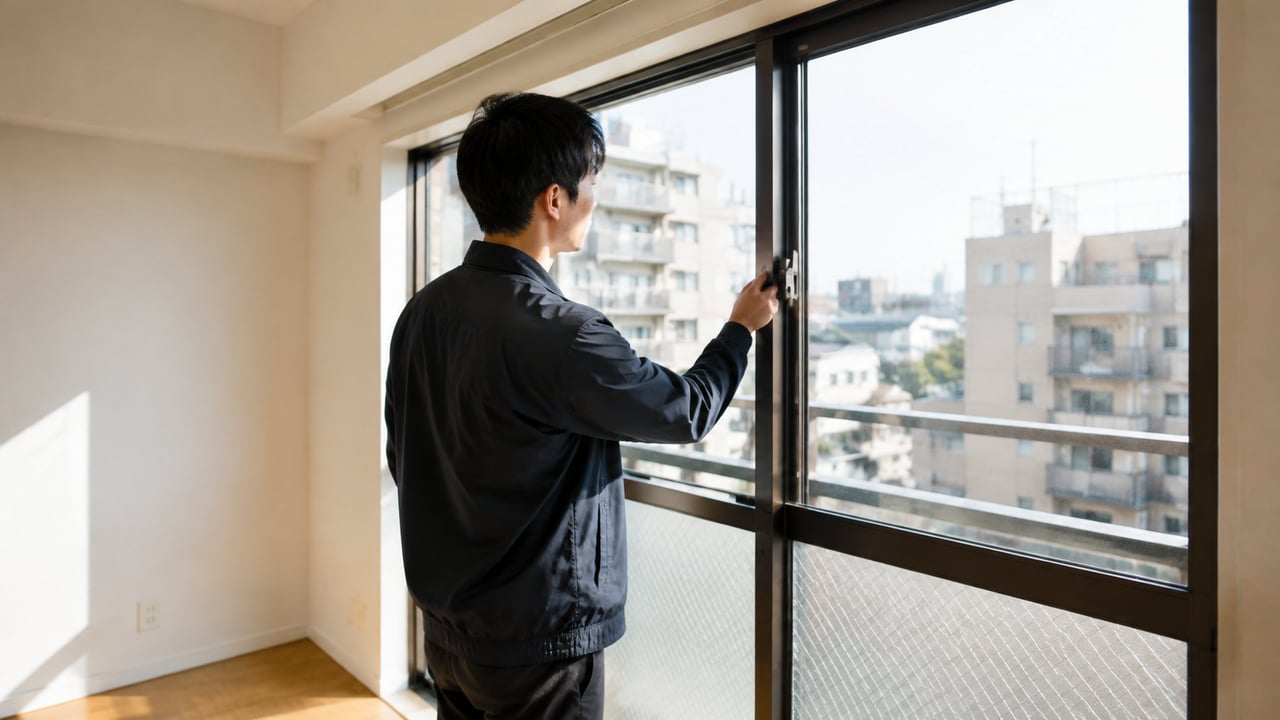
Do not buy furniture from the listing’s square metres alone. After move-in, or at the viewing, measure:
- Corridor width from the entrance to the kitchen and bath
- Swing of doors and sliding panels
- Window sills, the air conditioner, and outlets
- Inside dimensions of closets (depth and whether a hanging rail exists)
- Ceiling height. Tall shelves will not fit a low ceiling
This article does not treat a nationwide “average m²” as official. Your plan and tape measure are authoritative. For large pieces, also measure the stairs, lift, and corners on the way in. Leaving belongings in a shared corridor can breach management rules and block evacuation.
Where should storage go vertical?
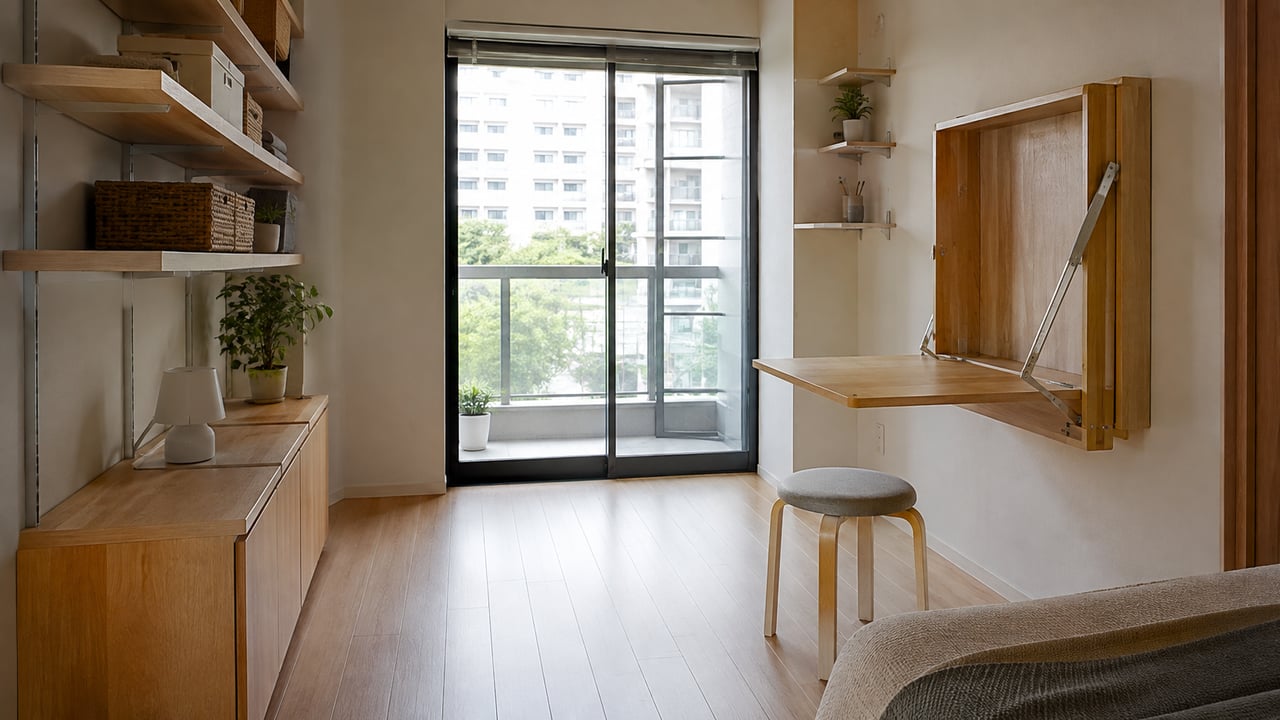
Use the existing closet, overhead cupboards, and the back of a door before a new floor-standing unit. Tension rods and slim racks are useful if they do not crush the wall or ceiling. Too much tension can mark the wallpaper.
Rotating seasonal bedding and clothes belongs in the seasonal guide. Here, only check that everyday clothes, dishes, and papers do not block the path. A bed versus a folded futon is a lifestyle choice. If you put the futon away by day, leave closet airflow; mold equipment belongs in the seasonal article.
Unlabelled 100-yen shop boxes multiply quickly. Labels and “not on the floor” help more than extra bins.
The shoe cupboard exists so outdoor shoes do not spread into the room. How you take shoes off belongs in the manners article; here, only the number of shelves and where umbrellas go. In the kitchen, do not stack cardboard in front of the stove, and do not overload hanging cupboards.
What furniture does the lease actually allow?
Folding tables, wheeled carts, and sofa beds can work in a small room. Legs and casters can mark or scrape flooring and become restoration items. Whether you need mats depends on the floor and the contract.
Wall shelves, pins, nails, and screws are decided by the lease and restoration clauses. The MLIT restoration guideline explains ordinary wear versus damage the tenant may pay for. It is not legally binding; some units allow pins and forbid nails. Do not drill without permission. Settle move-out bills with
the deposit-return guide
.
Many household outlets are 100 V AC. If you import a large appliance, check the plug, wattage, and breaker first. Daisy-chained extension cords near heaters are a bad mix; heater safety sits in the seasonal guide.
Wall-mounted TVs and smart fixtures can violate the lease through holes or load. Place a Wi-Fi router where a door does not enclose it.
Should furniture block the breeze?
This article only asks you not to put a tall shelf in front of opposite windows or the fan. Choosing an AC, a dehumidifier, a kotatsu, or a kerosene stove is entirely the seasonal guide. There is no seasonal HVAC checklist here.
FAQ
Is a bed impossible in a 1K?
It depends on the measurements. A low bed or sofa bed can work if doors still open. There is no national yes-or-no.
May I fix a shelf to the wall?
The lease and restoration clauses decide. Confirm permission and the repair scope before you drill.
May I store overflow in the corridor?
Leaving items in a shared corridor often breaks building rules and blocks a fire route. Use indoor vertical storage first.
What if I have a pet in a small room?
Cages, toilets, and pet circulation belong in the pets guide. This article stays on general storage and furniture.
May I put heavy furniture on tatami?
Tatami marks easily. Use pads, avoid long pressure, and follow the contract. Choosing a washitsu belongs in the types guide.
What should you do next?
- Measure corridor, doors, and closet interiors before you buy large furniture
- Read the lease for pins, nails, and drilling
- Keep tall shelves off the AC and window line
- Continue with
the seasonal guide
and
property types
Sources
- MLIT — Restoration trouble guideline (checked 2026-09-08) — Ordinary wear versus tenant-paid damage; reference for wall holes.